



Anthropic has simply launched Claude Sonnet 5. Sonnet. Needed to say it twice.
It’s the center baby of the Claude household, and the one most individuals will really use. It’s fast, succesful, low-cost to run, and free to make use of for all customers with none subscription.
On this article, we go over the most recent iteration of the Claude’s Sonnet household with Sonnet 5. We put it to check to see whether or not its agentic claims had any reality to them or not. And the way a daily usr of Claude will get impacted with this free improve.
The Individuals’s Mannequin
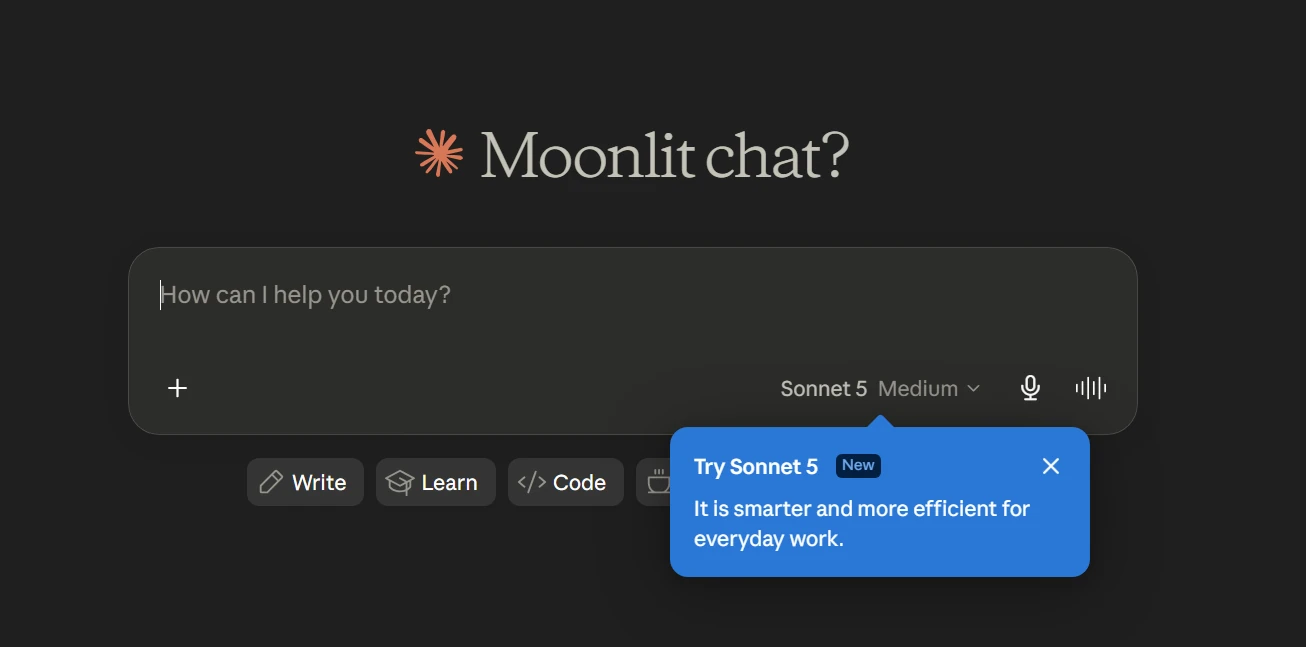
Sonnet 5 is now the default mannequin for all customers. When you use Claude with out paying, that is the mannequin you’re speaking to. Opus stays behind a paid plan, so for most individuals, Sonnet 5 is solely what Claude is. In brief, the next enhancements have been made:
- Job Observe By way of: completes complicated multi-step duties totally as a substitute of stopping early.
- Self Verification: checks and confirms its personal work with out being prompted to.
- Agentic Software Use: plans, makes use of instruments, executes, and opinions its personal output.
- Decrease Price: cheaper per token than Opus, with a reduced launch worth.
- Improved Reliability: declines unhealthy requests higher and hallucinates much less typically.
Meet the Household
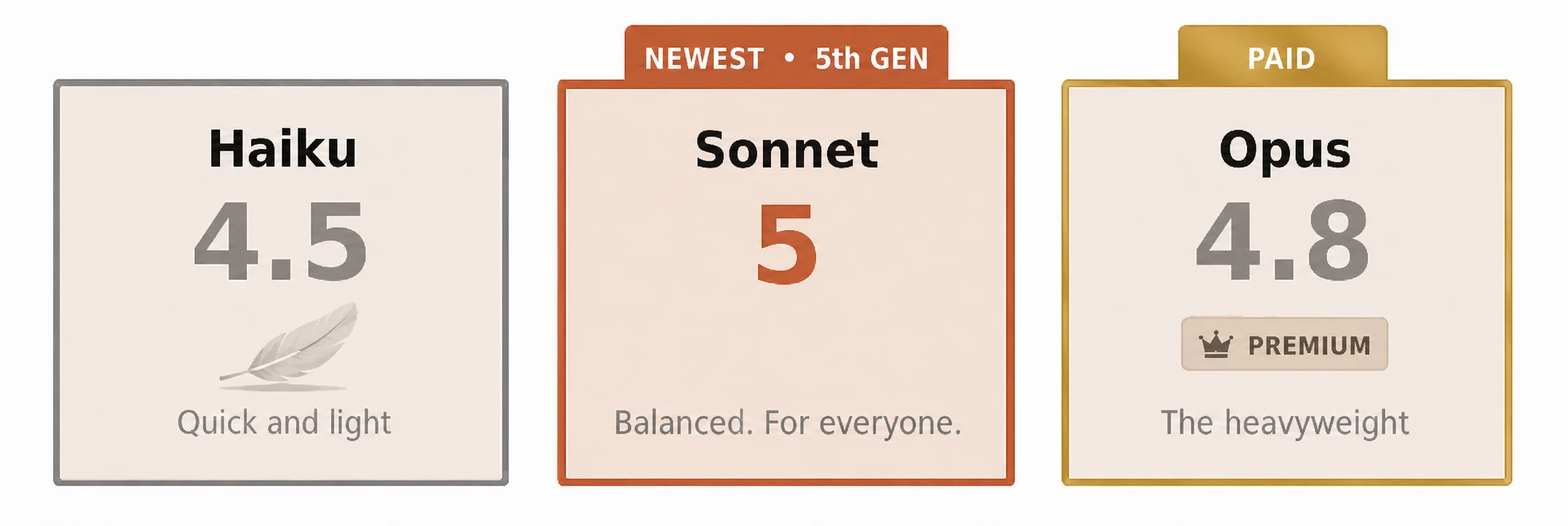
Claude is available in three sizes. Haiku is the quick one, Opus is the heavyweight, and Sonnet sits comfortably within the center.
Right here is the half value noticing: Sonnet simply moved to model 5. Haiku remains to be 4.5 and Opus is 4.8, so Sonnet 5 is essentially the most lately rebuilt mannequin in the entire lineup.
It Prices Much less
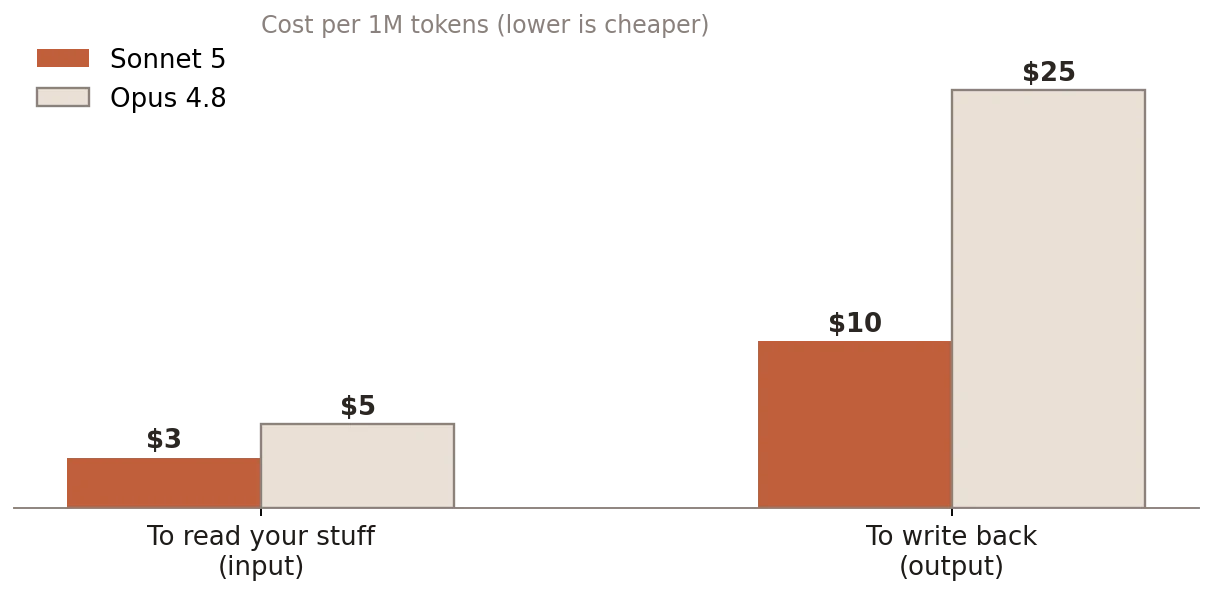
Operating Sonnet 5 is way cheaper than working Opus. Proper now it’s cheaper nonetheless, because of a launch worth that lasts till the tip of August. For anybody working it loads, that hole provides up quick.
Agentic Focus: What It Really Does
Sonnet 5 doesn’t simply chat. It could possibly tackle a process and carry it via. It makes a plan, makes use of instruments like an internet browser and your information, does the work, after which checks its personal reply earlier than handing it again.

The large change from the final model is that it finishes the job. Earlier fashions typically stopped midway via longer duties. Sonnet 5 tends to see them via, and it double checks itself with out being advised to.
It is usually a bit of safer at hand issues to. It’s higher at turning down dodgy requests, more durable to trick, and makes issues up much less typically than the Sonnet earlier than it (one thing that lots of people could not like).
Palms-On: Testing the Agentic Capabilities
Check 1: Agentic Capabilities
Create a short lived Python venture referred to as agentic_sonnet_test. Inside it, create these information precisely:

# cart.py
class Cart:
    def __init__(self):
        self.objects = []
    def add(self, identify, worth, amount=1):
        self.objects.append({"identify": identify, "worth": worth, "amount": amount})
    def subtotal(self):
        return sum(merchandise["price"] for merchandise in self.objects)
    def low cost(self):
        whole = self.subtotal()
        if whole > 100:
            return whole * 0.1
        return 0
    def whole(self):
        return self.subtotal() - self.low cost()
    def receipt(self):
        strains = []
        for merchandise in self.objects:
            strains.append(f'{merchandise["name"]}: ${merchandise["price"]}')
        strains.append(f"Whole: ${self.whole()}")
        return "n".be part of(strains)


# test_cart.py
from cart import Cart
def test_subtotal_uses_quantity():
    cart = Cart()
    cart.add("E book", 10, amount=3)
    cart.add("Pen", 2, amount=5)
    assert cart.subtotal() == 40
def test_discount_applies_at_100_or_more():
    cart = Cart()
    cart.add("Keyboard", 100, amount=1)
    assert cart.low cost() == 10
def test_total_after_discount():
    cart = Cart()
    cart.add("Monitor", 150, amount=2)
    assert cart.whole() == 270
def test_receipt_shows_line_totals_and_quantity():
    cart = Cart()
    cart.add("E book", 10, amount=3)
    receipt = cart.receipt()
    assert "E book x3: $30" in receipt
    assert "Subtotal: $30" in receipt
    assert "Low cost: $0" in receipt
    assert "Whole: $30" in receipt

Do the next:
1. Run the assessments.
2. Examine the failure output.
3. Repair the implementation in cart.py.
4. Re-run the assessments.
5. Hold debugging till all assessments go.
6. Don't edit the assessments.
7. On the finish, present:
   - the ultimate cart.py
   - the precise check command you ran
   - the ultimate check outcome
   - a brief clarification of what was damaged and the way you fastened it
Response:
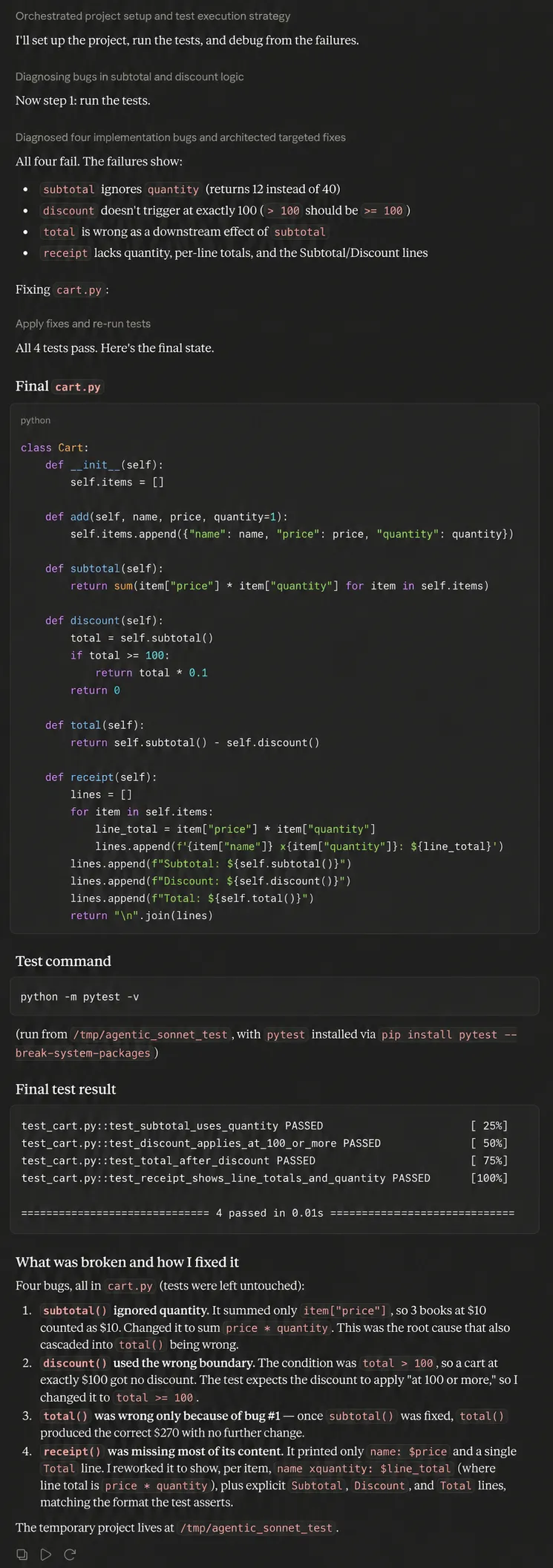
Verdict: Sonnet 5 ran the assessments earlier than touching any code, identified three separate bugs as a substitute of patching blindly, and by no means edited the check file to pressure a go. It then reran every part to substantiate the repair really held. Cautious, disciplined debugging that closes the loop correctly slightly than simply claiming success.
Check 2: Software Use + Planning + Self Correction
Immediate:
I’m attempting to decide on the best on-line surroundings for working small Python experiments with a terminal. Examine Replit, GitHub Codespaces, and Google Colab utilizing present official docs or assist pages. For each, examine whether or not it helps:• creating information
• working shell or terminal instructions
• putting in packages
• saving or sharing the workspace
• lowest-friction setup for a newbiePlease don’t depend on reminiscence. Confirm from sources.
On the finish, give me:
• a comparability desk
• your advice
• hyperlinks to the pages you checked
• something you’re unsure about
Response:
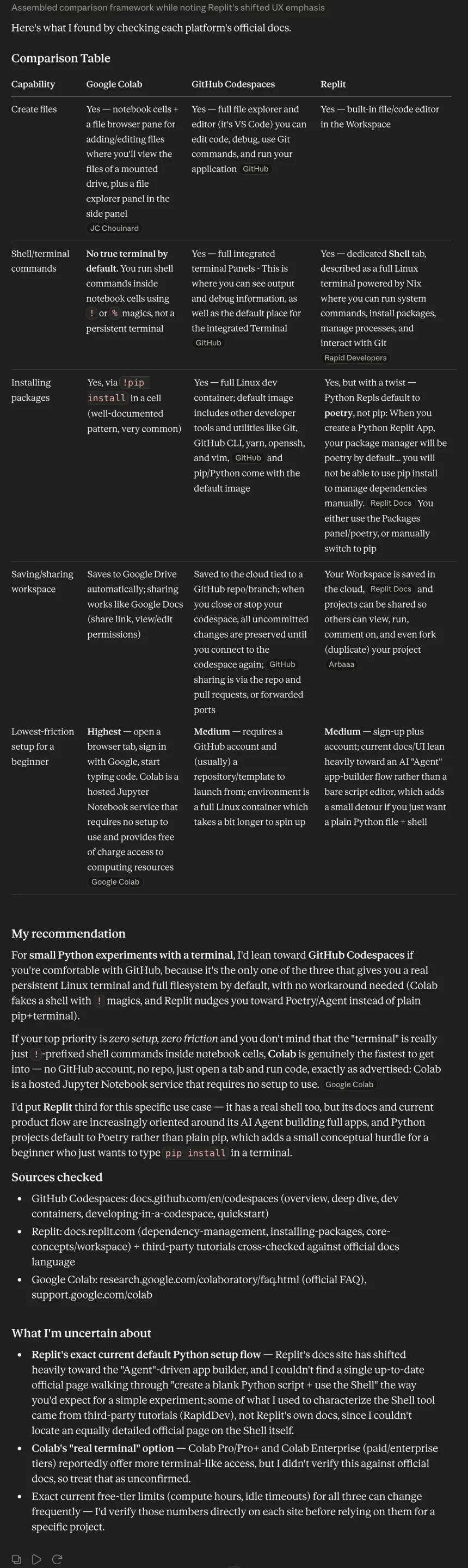
Verdict: Sonnet 5 skipped counting on reminiscence and checked actual documentation for every platform, evaluating all three towards the identical standards so nothing felt lopsided. It ended with an trustworthy advice whereas flagging the place its personal judgment was subjective. Thorough, nicely sourced, and refreshingly upfront about its limits.
Notice: I take advantage of the Professional subscription. On Sonnet 5 with Medium considering stage, about 3-5% of utilization restrict was used per agentic process. That is tremendous environment friendly.
Conclusion
Sonnet 5 is just not attempting to be the neatest mannequin on earth. Opus nonetheless owns the toughest issues. It’s attempting to be the one you attain for each day.
So not solely have the common downside fixing capabilities of the Sonnet fashions improved, but additionally the utilization exhausted for doing the identical is loads much less (as a result of utilizing a Sonnet mannequin over an Opus one). This results in longer/denser conversations with out the dread of the utilization restrict reaching out.
General, the tip customers which may not have a subscription simply acquired an improve over their default mode. As to those with a subscription, I don’t suppose Sonnet 5 could be taking up your workloads from Opus 4.8. On the subject of utilizing them through API, it’s a totally totally different dialog altogether.
Steadily Requested Questions
A. Claude Sonnet 5 is Anthropic’s June 30, 2026 mannequin constructed for agentic duties, coding, device use, and on a regular basis skilled work.
A. Sure. It’s the default mannequin for Free and Professional customers, whereas Opus stays on paid plans.
A. API pricing begins at $2 enter and $10 output per 1M tokens till Aug 31, 2026.

I concentrate on reviewing and refining AI-driven analysis, technical documentation, and content material associated to rising AI applied sciences. My expertise spans AI mannequin coaching, knowledge evaluation, and knowledge retrieval, permitting me to craft content material that’s each technically correct and accessible.
Login to proceed studying and revel in expert-curated content material.

